
Everything Ocean Podcast
Shark series part 4: Are There More Sharks in Sydney? What 40 Years of Tracking Data Says
Shark series part 4: Dr Rob Harcourt has studied marine predators for 40 years and runs Australia's animal tracking facility. He tells Dan what the tagging data really says about bull shark numbers, the rain rule, nets vs drumlines vs drones, and why white sharks don't only hunt at dawn and dusk.
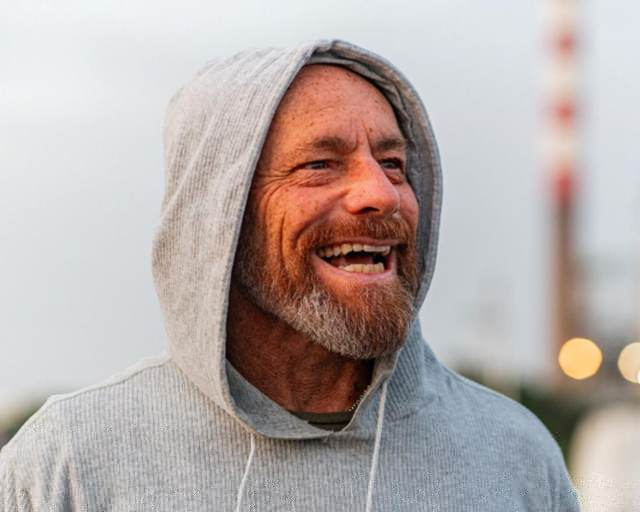
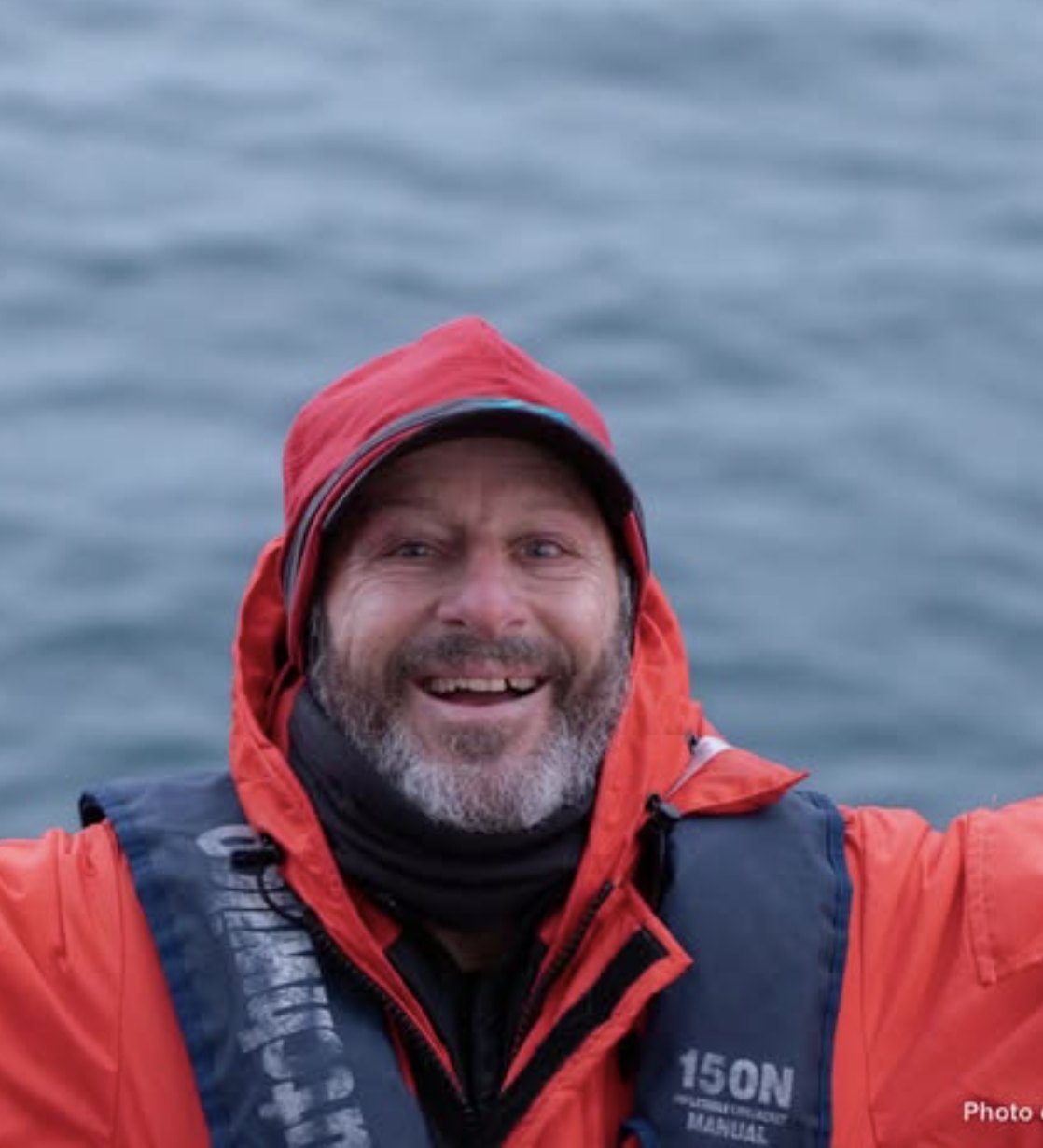
Everything Ocean Podcast — Episode 4, featuring Dr Rob Harcourt, Emeritus Professor at Macquarie University and lead of Australia's IMOS animal tracking facility.
Sydney has had a rough run. Four bites in 48 hours over summer, a fatality at Dee Why, the harbour, the Coogee attack — and a wall of noise on social media telling everyone there are more sharks than ever. So for this part of the shark series, Dan sat down with someone who has spent four decades collecting the actual numbers.
Dr Rob Harcourt has run a marine predator research group for 40 years and leads the animal tracking facility inside Australia's Integrated Marine Observing System — a federally funded program used by several hundred researchers that has tagged and tracked 180 species of fish, including every dangerous shark on our coast.
He's also a surfer and a free diver who's in the water most days, and, as he puts it, he doesn't take a cent from anyone with a stake in the answer.
Listen or watch: Spotify · YouTube · search "Everything Ocean Podcast" on Apple Podcasts.
Here's what stood out.
There is no evidence bull shark numbers are going up
This is the claim you see everywhere online, and it's the one Rob is most direct about. It isn't supported by the data — and unusually for a shark question, we actually have good data.
Fisheries have been tagging bull sharks in Sydney Harbour for years, and researchers have been tagging them in Queensland for longer. The acoustic tags last up to ten years. Because you know how many sharks are tagged, and you can count how many are detected, you can work backwards to a rough population estimate.
"There's no evidence of an increase in bull sharks in the harbour," Rob told us. "If anything it's actually a decrease, because we've got many more sharks tagged and we're seeing less of them."
There's a second, completely independent line of evidence: the shark mesh nets have been fishing more or less constantly since 1937, with a known and fairly fixed amount of effort. If there had been a population explosion, the nets would be catching far more sharks. They aren't.
"That's strong evidence, and it's reliable, robust evidence," he said. As for the popular pages pushing the opposite line — his point is worth sitting with: if you get paid to kill bull sharks, what are you going to say?

What is changing is where the sharks are, not how many
The east coast is warming and the East Australian Current is intensifying, and that's pushing tropical species further south and keeping them there longer.
Bull sharks have a rough 22°C threshold — above that, they're around. Six years ago one of Rob's PhD students built a forecasting model off the shark mesh data predicting that bull sharks would stay in Sydney about two months a year longer within a decade. It's tracking almost perfectly. They're arriving earlier and going home later.
Tiger sharks are moving south too. White sharks, by contrast, are a cool-temperate species with long-term residencies and known nursery grounds — Stockton Beach, and Lakes Entrance down near the Victorian border.
Which is also why those nursery areas don't see attacks: juvenile white sharks eat fish. A white shark has to reach roughly 3.3–3.5 metres before it can handle marine mammals at all. Below that, a decent-sized seal will turn around and bite back — and win.
The rain rule
Bull sharks use fresh water to locate prey. Heavy rain moves the bait, and the sharks move with it. Rob's rule of thumb is refreshingly practical:
If the Beachwatch program says the water's polluted, don't go in. You don't want the infection, and you probably don't want the company either.
The important calibration: this is a summer, bull shark rule. Heavy rain has nothing to do with white shark bites — different species, different season, different trigger. And when Dan admitted he probably won't surf in the rain over summer any more, Rob's response was measured rather than alarmed: "you probably would be fine."
Myth-buster: sharks don't only hunt at dawn and dusk
This one gets repeated as gospel, and for white sharks it's simply wrong. They hunt right through the day — and they use the sun to shield themselves from their prey.
Look at the timing of the two most recent white shark bites in Sydney. Coogee was around 10am. Dee Why was a sunny day, around 11am.
White sharks aren't a dawn-and-dusk animal, Rob says. They hunt during the day, and at night.
Worth remembering alongside the seasonal split: summer is bull shark season, and this time of year — late winter — is when there are far more white sharks around and very few bull sharks, if any.
Risk, honestly
Rob doesn't do the usual "you're more likely to be killed by a cow" brush-off, and that's what makes his version credible. Two things are true at once.
First, the comparison that actually matters is drowning. You are more than ten times more likely to drown than be killed by a shark. The weekend of the Coogee bite there was also a death at Shelly Beach — and almost nobody outside the people involved knows about it, while the whole world heard about the shark.
Second — and this is the bit scientists often skip — if you're a surfer or a diver in the water every day, your exposure is genuinely much higher than an occasional beachgoer's. That doesn't make the fear irrational. It makes it worth being informed about.
He also puts the current cluster in perspective: at the time of recording, Sydney had had one bite in seven months. An awful one. But one, against tens or hundreds of thousands of ocean entries. Clusters happen — the north coast had a spate and then nothing, WA had a run and then it settled — and an average made of peaks and troughs doesn't feel like an average when you're living through the peak.

Nets, drumlines and drones: the verdict
Nets. Rob is less worried about bycatch than most — a few dolphins now and then, perhaps 150 stingrays, against commercial fisheries killing an order of magnitude more. But he calls them a very primitive way to protect people, and expects they'll eventually be removed, just not in a hurry. Historically they did work: bite numbers dropped sharply after 1937, helped along by two changes nobody credits — treating sewage, and stopping abattoirs from pouring blood and offal into the water. Both were pumping productivity into the inshore zone and drawing in fish, and behind them, predators.
One image from that section stays with you: a 4.7 metre white shark pulled out of the Maroubra net, with a hammerhead head and a dolphin head in its stomach. Those animals were probably caught first, and the shark came in to eat them. That's how nets work.
SMART drumlines. His pick of the mitigation tools. They're expensive, but you tag and release the same individual and learn what it does for years afterwards — a lethal program tells you what one shark was, once. Tagged sharks also stay away from that beach for a good while afterwards. And the concern that baited lines lure sharks in doesn't hold up: work from Réunion, where the technique was invented, shows they don't attract sharks from any distance. Maybe 50 metres. If a shark takes the bait, it was already there.
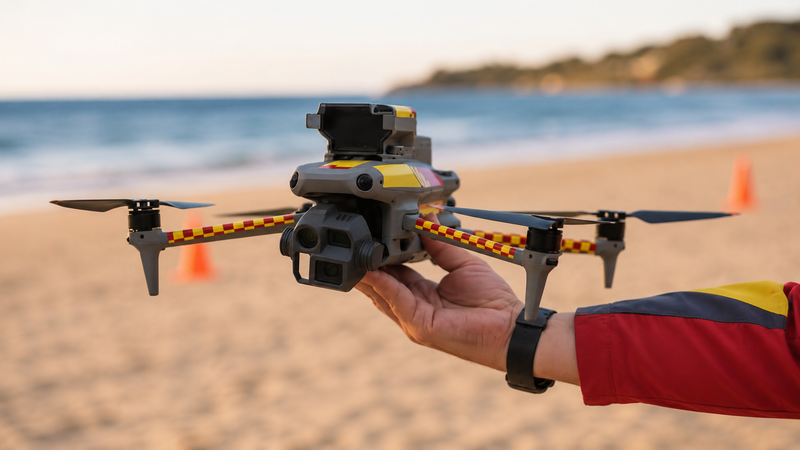
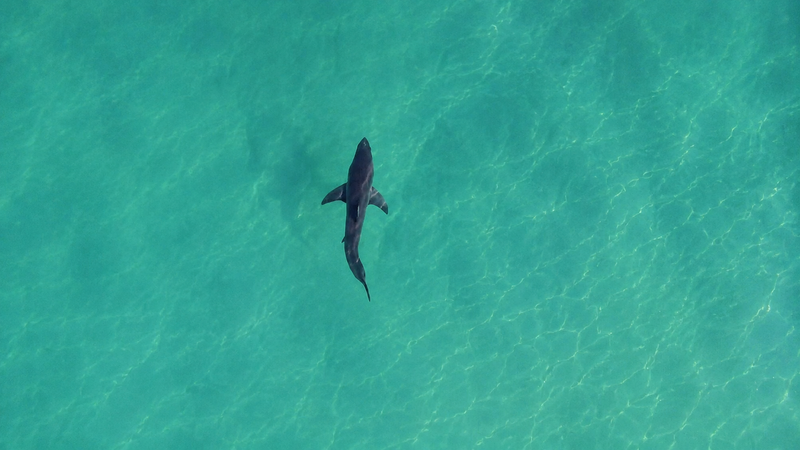
Drones. Non-invasive, and you can actually see what's going on — with a caveat worth understanding before summer. "If you're going to close beaches when the drone detects a dangerous shark, we're going to see a lot more dangerous sharks, because they've always been there. We just haven't been looking."
The next step is behavioural: the models Rob's group has built can distinguish a shark moving in a straight line (transiting) from one moving erratically (hunting). Fold that into drone AI and you could stop clearing the water for animals that were only ever passing through.
Two myths worth retiring
"A dead shark on a drumline scares the others off." No veracity to it, Rob says — plenty of sharks eat other sharks. And you couldn't demonstrate it anyway without tagging, because you'd have no way of knowing who was in the area to begin with.
"More seals and whales means more sharks." Much messier than it sounds. Seals are adult white shark food, but seals also eat juvenile sharks — so more seals can mean fewer sharks, not more. There's a famous food-web study showing that culling seals off South Africa would have decreased the target fishery, because the seals were suppressing cannibalism in those stocks. "It's not as simple as if we kill them there'll be less of them. It often is: if we kill them, there'll be more of them."
If it feels sharky, get out
Rob's own rule, and he lives by it. He was free diving off Shark Point near Clovelly recently, noticed the fish behaving strangely, stayed shallow and got out much earlier than planned. Later he checked the charts: a white shark had been tracking back and forth between Maroubra and Bondi.
"If it feels sharky and you feel uncomfortable, just get out and come back another day. You can always surf another day — and if you don't feel comfortable, you're not going to enjoy the surf much anyway."
His other piece of practical advice: surf with someone else. It halves your chances. And if you're out on your own somewhere remote, a personal deterrent is worth having — though he's blunt that most of them do nothing. The Shark Shield / Ocean Guardian is the one with real evidence behind it, and there are a couple of new systems coming out of Macquarie, including lights mounted on boards.
The threat nobody's shouting about
Asked what worries him most about the ocean, sharks didn't rate. It's heat. We've put so much energy into the ocean that it will keep warming regardless, and this summer's El Niño may be the hottest on record — with real consequences for places like the Galápagos.
But he finished on the reason for optimism, and it's a good one. When Rob was a kid there were about 500 humpback whales off the east coast of Australia. There are now around 50,000. The ozone hole he worked under in Antarctica — where sunblock wasn't enough and he'd tuck cardboard under his gear to stop the burn — has largely closed, because of an international treaty.
"We can fix things if we make a determined effort. We just need to work together to do it."
Catch the rest of the shark series and every episode under the Podcast filter in From the Lineup.
Full episode transcript
Read the full transcript (auto-generated — tap to expand)
This transcript was generated automatically from the episode audio and lightly cleaned up, so expect the odd mis-heard word.
[00:00] Episode four of the Everything Ocean podcast, and episode number three of the shark chat series, is with Dr Robert Harcourt. Rob leads Macquarie University's marine predator research group. He's the lead for the Australian Integrated Marine Observing System animal tracking facility, and he specialises in sharks, seals, whales and other large marine predators. Rob's also a good friend of mine — I've known him since I was living in Bondi, and I have a massive amount of respect and appreciation for the stoke that he gives in the water and to those around him. He's always the loveliest bloke in the water, calling people onto waves, telling people to jump on his party waves, helping people out that aren't getting waves themselves, and just bringing a really welcoming vibe to the water. It's something I've always really admired about him. And I know that also means he's got skin in the game when talking about these shark interactions — he's in the water as much as anyone, surfing, diving, and all his friends are surfers. So this is something that's very close to his heart as well, and I really appreciated him delving into these topics from an independent point of view with me.
[01:46] All right, here we go. Got Rob on the podcast today — second time on. How are you, Dan? — Yeah, good, good, thanks for being here. This is the rebranded podcast, by the way. We've gone from the Oceans Matter podcast to the Everything Ocean podcast. — Everything does matter. — Bit of a touch-up since the last time you were on. A lot's been happening in the ocean, especially around Sydney. — That's true.
[02:21] And I know no one's more aware of that than yourself. So, a little bit about yourself — you're a marine biologist and you specialise in a few different things. — Yeah, so I'm an emeritus professor, which means I'm sort of old. Semi-retired from Macquarie. I've been running a group that works on marine predators for 40 years now. We work on everything from the conservation of whales through to measuring Antarctic ocean qualities with computers attached to seals, and turtles up in the top end, through to white sharks. Done a lot of work on shark ecology in New South Wales and around Australia — a general interest in large things that move around a lot.
[03:09] So I run an animal tracking program that's been going for 20 years now. It's federally funded, and several hundred people use the data. We track 180 species of fish including all the dangerous sharks, looking at how they're moving with climate change, marine park boundaries, movement ecology in general. And we've been narrowing down things like the relationships between ocean features and where sharks come in to feed — where they're likely to bite. That's been one of our focuses over the last decade or so.
[03:58] I remember last time I had you on, you said if you were surfing outside of Sydney you'd probably wear a personal deterrent. — I don't know if I said I'd wear one, but I'm pretty sure I said if I was down in WA I'd probably wear one. Or maybe we were talking about the mid north coast, when all those bites were occurring. So if you're surfing by yourself — the Shark Shield, which then became the Ocean Guardian, which is the one the WA government gave a subsidy for — we know from some really cool work in South Australia that it's pretty effective at deterring shark bites. It's not 100%, but it will deter white sharks from biting you. I was definitely of the opinion, and still am, that if you're surfing by yourself in a remote area it's a good thing to have. You also probably want a personal locator beacon somewhere close on the beach. But preferably surf with somebody else — half the chances of getting bitten.
[05:21] It has felt like areas outside Sydney have always carried a greater risk, but at the moment it feels like Sydney's having its moment. — Well, I'm only going off what's happened in the last six months. — We had four in the northern beaches, the harbour, one up the coast, the Coogee incident, and there was the fatality at Dee Why. I was there for that one. And the Swiss couple on the mid north coast. It's a long coast, and it seems like Sydney's had the most recently. How are you feeling at the moment? — I mean, I surf every day still. It's actually pretty good because there's a lot less people in the water. So you get a lot more waves. But I know people are scared. A lot of people are nervous about it, and I think that's probably because there's been a lot of news about it and there's been a big government response.
[06:48] I don't think our actual risk is much higher — or even higher at all — than it was before. But what I would say, and I've talked about this a lot with my colleagues, is that we always say our shark bite risk is very low because you're more likely to be hit by lightning or killed by a cow. But if you're a surfer or a diver — and I do both — you're in the water all the time, and then you've got a much higher risk than if you're an occasional beachgoer.
[07:20] I always like to compare it to drownings. The weekend of the Coogee bite, there was a death at Shelly Beach. And nobody really knows much about that. — No. I mean, the people who were involved do, but the public doesn't. Yet everybody in Australia and around the world knows about the Coogee bite. So we do have a visceral fear of shark bites which is greater than our fear of the ocean. You're more than ten times more likely to drown than to be killed by a shark. We need to keep that in mind — but that doesn't mean you can't be scared.
[07:59] I think for experienced surfers, a lot of them think of themselves as capable water people, so their chances of drowning feel lower than something like a shark attack, which is outside of their control. — Which is probably not true, because a lot of surfers are great right up until they lose their board, and then they're not quite so capable. Some of the best big-wave surfers in the world have drowned.
[08:29] What's unsettling people, especially in Sydney, is that it feels like it's heading in a direction. We had basically no attacks for a long time, and now it feels like there's momentum. — But we can put that in perspective, because we also had a spate of bites on the north coast and then there hasn't been any. We had a whole heap in WA and now there's just the occasional one — normally fatal, because they're big white sharks. We tend to get clusters. They're not necessarily statistically significant, but we get clusters. Like the 48-hour incident in summer — everybody got spooked. I remember going out for a surf the Monday after and I was about the only person in the water. And when people went back in, they were all clustering near the flags.
[10:01] In summer when the water's warm, we know the bull sharks are around. We know they use fresh water to locate their prey. So when you get heavy rain, their prey moves and they move with it. A really good rule of thumb is: if the Beachwatch program says the water's polluted, then don't go in — that probably means there are going to be bull sharks around hunting too. You don't want to get infections and you don't want to get bitten.
[10:46] Where that poor kid was killed at Nielsen Park — it's called Shark Rock. It's actually the area with the highest rate of successful bull shark tagging in the harbour. It's called Shark Rock for a reason, because there have always been sharks seen off there. But it's also a really popular place to muck around. He was just very unlucky.
[11:09] There were four attacks in 48 hours, and another guy got bumped off his board at Freshwater. That seems a lot higher than the average. — But averages are averages. They're made up of the peaks and the troughs. For most of summer there's nothing happening, and then you get a little cluster.
[11:50] So you're not of the opinion that there are significantly more bull sharks? — We've got really good data on bull sharks, because they've been tagging them as part of the program I manage the federal part of. Fisheries have been tagging sharks in the harbour, and people have been tagging bull sharks in Queensland for many years too. The tags last ten years. So we know how many are detected, and we can work out roughly how many are present, because you get the ratio of tagged sharks to the number actually detected. There's no evidence of an increase in bull sharks in the harbour. If anything it's a decrease, because we've got many more sharks tagged and we're seeing less of them.
[12:35] They're also harvested. And the other thing is we have shark meshing here in New South Wales. The nets have been working constantly since 1937. They take them out in winter, which doesn't affect bull sharks. The crucial thing is we've got known effort — so if there was a big explosion in bull sharks, we'd be catching a lot more. And we're not. That's strong evidence, and it's reliable, robust evidence.
[13:15] That's interesting, because that's what a lot of people are saying. — Lots of people are saying that, and there's no data. We have data. There are some people who've got very popular social media pages, and of course there's a vested interest there too — because if you get paid to kill bull sharks, then what are you going to say? "Oh, there's a lot more bull sharks." So it's really important — I don't get any funding from anyone. I don't have any vested interest in this. I'm a surfer and a diver and I'm regularly in the water. I really want the best data, because I want to know that I'm going to be safe and my friends are going to be safe. It's entirely about what's the best data we have available. And do we have good data? We actually have pretty good data.
[14:14] So it's the Integrated Marine Observing System — across all aspects of the ocean. Water temperature, salinity, currents. It's got satellites, moorings — there's a mooring at Port Hacking that's been going nearly 100 years. There are gliders that move around collecting water profiles, and the Argo floats off the continental shelf, which is how we get a lot of our weather predictions.
[14:53] As part of that we have an animal tracking program with two components. One is animal tagging — satellite tags on seals and turtles to measure ocean conditions in areas which are hard to get to otherwise. In the Southern Ocean in winter, elephant seals dive deep and surface to breathe, so we get lots of profiles in places where Argo floats struggle because of surface ice. And up in the top end where we have lots of cyclones, the turtles dive to the bottom and we get profiles up there — you can't put Argo floats in, it's too shallow. The Navy, maritime shipping, the Bureau of Meteorology all use this data to improve forecasting. The turtles are great because they're slow, so when cyclones come over the top they just continue doing their thing. We're getting really good measurements inside cyclones that you can't get with other instruments, because other instruments get washed away. We've shown we can predict cyclones better using these turtles. All the stuff that goes into a windy app — a lot of that data comes from seals and turtles.
[16:25] On the other hand we've got an acoustic facility — small listening stations. Everyone who surfs in New South Wales sees the yellow buoys that stick up. Those are the VR4Gs. They collect data on animals tagged with an acoustic tag. In New South Wales, when they use SMART drumlines, every shark they catch gets tagged. The tags last up to ten years. When an animal comes near one of these listening stations we get a recording. The yellow buoys send a real-time mark saying this tagged shark is near here, but we also have a whole bunch of stations that aren't real time, which we download once a year or more frequently. That lets us build models that predict where animals are moving according to water temperature, salinity and flows. Those sharks are also satellite tagged, so we get real-time information — but satellite tags don't last as long, which is why the acoustic tags are good.
[17:48] So the process is: shark bites a drumline, boat gets a ping, goes out — — They don't even pull it out of the water. They tag it in the water, then move it offshore and let it go. They don't like being tagged, it's a bit stressful. So we know really well that the SMART drumline scares the sharks away from the beaches, and they go away for quite a long time and are less likely to come back close.
[18:30] We've used that to build models to predict where sharks are going to be feeding, as opposed to just being present — because sharks are present all the time. What we've shown with some really clever models is that when the animals move around a lot, that's what they do when they're looking for food. Whereas when they're just travelling, they tend to go in a bit of a straight line. That's true of all marine animals. So we can use that to predict where people are being bitten, and we've got a very high predictive rate.
[19:38] People need to understand that there are three main types of dangerous sharks in Australian coastal waters: the white shark, the tiger shark and the bull shark. The bull shark and the tiger shark are primarily tropical species that come down when the waters are warmer. Tiger sharks can go to really cold waters, but they tend to be more tropical, whereas white sharks are a cool-temperate shark. The bull sharks are the ones that are really tolerant of fresh water. So in summer, heavy rain is a really good predictor of potential problems with bull sharks. But it's got nothing to do with white shark bites.
[20:20] White sharks hunt right through the day — not just dawn and dusk — and they use the sun to shield themselves from their prey. The last two white shark attacks we've had here: Coogee, 10am. Same with the Dee Why one, it was a pretty sunny day, about 11am. White sharks are not crepuscular. They hunt during the day, and at night. So people have to remember that the summer sharks tend to be the bull sharks, but white sharks are still occasionally found. This time of year is when there are a lot more white sharks around and very few bull sharks, if any.
[21:14] Where do tiger sharks fit in? — Tiger sharks are a little further offshore than bull sharks, but mapping similar sorts of things. They're warm water. They're coming further south now than they used to. Remember there was a woman bitten at Anna Bay 10 or 15 years ago — that was a tiger shark.
[21:42] Queensland also seems to be having fewer shark attacks than New South Wales. Is that true? — Queensland had quite a few over the last few years. This summer we just had a bad summer. I wouldn't be going, "Oh my god, we're now in a shark world." It's more like we had a bad summer and a hell of a lot of rain. And this summer we've got a super El Niño coming, so things are going to be very different.
[22:28] Queensland's drumlines are lethal — they just let the shark die on the line. Ours tag and release. What do you think about those two measures? — I actually think the SMART drumlines are much, much smarter. And not just in what they do but in their use, because we know that culling individual animals is not going to make much difference. We've already got that with the shark mesh nets anyway. With the SMART drumlines it costs a lot more, but we're getting really good information on what the animals are doing. We're never going to remove all sharks. A lethal program that just kills the animal tells you what the shark is, how big it is and what it's been eating — but you're not getting long-term information about the same individual. Whereas with the SMART drumlines you're learning what these animals are capable of, and how we might be able to mitigate things in future.
[23:46] You've heard the theory that a shark dying on a drumline — the scent would scare other sharks away? — That doesn't sound like it has a lot of veracity, given that a lot of sharks will eat other sharks. And it would be very hard to collect data on without doing SMART drumlines in order, because you need to track the animals to determine if they're moving away. We don't have an independent means of determining who's around unless you have tagging. How would you know there are fewer sharks present because there's one hanging off a drumline? You just can't.
[24:34] There's the theory that killer whales eat the liver of the shark and leave the body, and other sharks recognise that. — There are a couple of killer whales renowned in South Africa for coming to the hunts where the shark cage industry is, and the white sharks seem to have moved off from that area. There are two schools of scientific thought. One is that the killer whales scared the white sharks out. The other is that the sharks moved anyway and it's coincidental. The evidence is equivocal, which means we can't definitively say one way or the other. It is certainly true that fish learn when there are predators in the region — if you go to an area where people spearfish, the fish behave very differently to somewhere like Shelly Beach at Manly where nobody spears. And white sharks are attuned to what's happening. But that doesn't mean they move away when there's a dead animal present. Quite the opposite — they'd eat the dead bodies.
[26:13] Do we have much of an orca population around the east coast? — No. They move up following the humpback migration, so we get killer whales going past Sydney once or twice a year, but very few. There are a lot more down in Victoria and Tasmania, but still very low. There's a very large healthy population off Bremer Bay in WA. Probably the best place in the world to see them, I think.
[26:46] Victoria doesn't have many shark attacks anyway. — Has a lot less people in the water. You've always got to tease apart the number of people bitten and how much time people spend in the water. If there are a lot more people in the water, the exposure's a lot higher. Here we have warm water year round, so people surf year round in large numbers.
[28:11] Why so specific in these clusters? Somewhere like Victoria seems to have less, Tasmania — — Tasmania, you need to look at water use. The water's cold, about 12 degrees at the moment. So the people who surf are hardcore, they're committed. I was surfing at Bondi this morning and it was a quiet morning — there were probably 50 people in the water, plus probably 200 people who went swimming while I was surfing. Whereas anywhere in Tasmania at this time of year, if you go to a popular beach you might see three or four surfers, maybe 10 if it's a really good day on the weekend. So the likelihood of being bitten might be higher. It's just that there are a lot less people in the water.
[29:06] How are you finding water use in your area? You're in Bondi. — It's gone down a lot. There's a lot more waves. People are definitely a lot less comfortable about surfing by themselves. I was speaking to a friend of mine who used to run a surf shop, and he was saying he hasn't been surfing as much — he's done lots of great surfing, so if he doesn't surf for a little while it doesn't matter. I think a lot of people feel like that.
[29:47] I pointed out to him that I was free diving at Shark Point off Clovelly the other week and the fish were all behaving funny. So I didn't go out where I normally go, which is quite deep, about 15 to 20 metres. Stayed in about 6 metres of water and quite near the rocks, and I hopped out much quicker than I'd planned to. Just didn't feel that good. Felt sharky. Anyway, I looked on the charts and a white shark had been cruising back and forth between Maroubra and Bondi. So if it feels sharky, you might as well get out.
[30:28] I always say to everyone: if it feels sharky and you feel uncomfortable, just get out and come back another day. You can always surf another day. If you don't feel comfortable, you're not going to enjoy the surf much anyway.
[30:36] I've definitely noticed that from the first week of the drone program — we were closed every day for five days in a row. — I was surfing mainly because Bondi kept getting closed. — And there was more fish, heaps of birds out to sea, whales moving around. Just a lot more activity in the water. Since that's died down there's been less birds, less fish, less sharks being spotted. So you do have to really tune in now. — It's a good thing to do.
[31:17] Were you involved in the drone program? — I'm not involved, but we've been working with the people doing it. As I've said all the way through, drones are great. You can see what's going on, it's non-invasive, and it gives you a good idea of what's there. But if you're going to close beaches when the drone detects a dangerous shark, we're going to see a lot more dangerous sharks — because they've always been there. We just haven't been looking. And that means people will be getting out of the water more. Maybe, especially with these models, we might get clever at detecting when a shark is actually feeding as opposed to just passing by. But that'll take training of the people doing the operation. There probably will end up being automatic drones with algorithms to detect what the animals are doing, clever enough with time to say, this animal is obviously foraging, as opposed to this animal's just passing by, so we can ignore it. But that'll take some time.
[32:23] I went into the Surf Life Saving New South Wales headquarters the other day and they've got two drone rooms. An AI drone room where they're testing different AI models — the drone flies into this clam, it closes up, charges it, and the one next to it opens and the next drone flies out. Half an hour on, half an hour off. And then the other room is their whole control room, all the beaches along the coast. Does the data get handed to someone like yourself? — Not to me, but there's definitely some really good research happening with it. It's complementary to the tagging data. The program where we did the analysis of the tagging is also working with the drone data with Surf Life Saving in South Australia. And we were working with Fisheries and our astronomy department a few years ago to develop the initial AI algorithms to detect and identify sharks from turtles, from dolphins — or even dangerous sharks from non-dangerous sharks. You don't have to get out of the water if a grey nurse is swimming around.
[34:11] What's the data telling you at the moment across the board? Is the ocean rebounding? — Oh, that's too big a question, Dan. It's much more nuanced than that. We are getting clear evidence that a lot of fish are moving south. The waters are warming and staying warmer for longer — if you live in Sydney you know that, because the water's still 18 now, and it's late July. We know the East Australian Current is intensifying, so that's bringing animals from warmer waters further down. More tropical animals are staying further south than they used to, and that includes the bull sharks and the tiger sharks. They're staying longer because the water stays warmer over winter. When I first came to Sydney 25 years ago, the small tropicals would come down with the EAC and then die over winter, whereas now a lot of them manage to live right through, and then they can settle and breed further south.
[35:42] Are the numbers of bull, white and tiger sharks increasing or staying the same? — It's not so much the numbers, but where they are is changing. I had a very smart PhD student who built a model six years ago based on the shark mesh data, forecasting what bull sharks would be doing in 10 years' time. It's tracking perfectly with the model. The forecast was they'd stay two months a year longer in Sydney, which they pretty much are doing. They're coming down earlier and going home later, because they have a 22 degree threshold — when it's above 22, there'll be bull sharks around. Tiger sharks are also moving further south, we know that from satellite tracking. White sharks are tolerant of warmth but they're a cooler water shark. We know they have long-term residencies in different areas, and we have nursery grounds at Stockton Beach, and Lakes Entrance down to the Victorian border — that's a white shark nursery.
[37:19] It's funny though, those two areas don't seem to have attacks. — Well, they're juvenile sharks. They don't eat marine mammals. White sharks have this life history where they start off eating mainly fish, and then as they get bigger they transition across to including marine mammals — seals and dolphins. But they have to be above about 3.3 to 3.5 metres to be able to do that. They're not big enough to handle them before that. A big seal will turn around and bite back, and they'll bite back hard, and they'll kill a small shark. Seals eat sharks. They're a really good predator. So juvenile sharks might take a bite, but they're not going to predate you.
[38:53] What about seals and whales recovering — the theory that more abundant food is leading to more sharks? — There's always a lag. Seals are adult white shark food, so they're not going to cause an increase in survival of juveniles, which is where most mortality happens for all animals. It's certainly true that fur seal numbers have recovered a lot from exploitation, and humpback whales are pretty much back to pre-exploitation numbers — in fact they've probably exceeded them. And of course with a bunch of humpbacks, some babies are going to die, so they're providing free food for a whole bunch of predators. There's probably more food available. And we're also not hunting white sharks the way we used to. We still kill bull sharks — there's a commercial fishery for bull sharks in the Clarence River. — What do they do with them? — Fish and chips. Juveniles. That's how you can harvest sustainably.
[40:16] Like I said, there's no real clear evidence of a significant increase in any of those sharks in the New South Wales region. And we know that from the shark mesh nets — fixed fishing effort. That doesn't mean survivorship isn't going to improve, because there's ample prey. On the other hand, right whales, which were recovering really well, have had that recovery slow, because things are changing in the Southern Ocean. There are much more complex interactions we need to think about. It's not as simple as: if you increase seals, you're going to have more sharks. Often that might result in a decrease, because seals eat sharks — they'll eat more juveniles.
[41:09] There's a really famous paper by a guy called Yodzis looking at food webs in marine systems, where they wanted to cull seals off South Africa. He showed that if you cull seals, instead of getting an increase in the fish they were targeting for the fishery, you'd actually get a decrease — because the seals were inhibiting cannibalism in some of those stocks. — Fish cannibalise fish? — A lot of fish are cannibalised. They'll eat the small ones of their own species, including white sharks. — So this is where it's not as simple as: if we kill them there'll be less of them. It often is: if we kill them, there'll be more of them, because we're removing one of the things suppressing population increase. You have to really understand the system to be able to manage it. One of the reasons we have lots of fisheries collapse is that we often don't have enough scientific information to understand how much we can harvest without causing the population to go down too far.
[42:48] If you were in charge of designing a shark mitigation program with unlimited funding, what would you implement? — To be honest I think the way we work in New South Wales is actually pretty good. Because people want to surf and feel comfortable, I'd be investing in trying to improve shark deterrents — most of them don't do anything. They make a lot of money for a few people, but the only one that's ever been shown to work effectively is the Shark Shield / Ocean Guardian. There are a couple of new systems coming online — there's a group at Macquarie who've invented a couple of different things which are probably quite effective for surfers, lights on boards and stuff like that, coming out commercially now.
[43:48] I think the drones are actually really good. Automated drones work well for New South Wales because we have clear water most of the time, so they can see through the surface. And if we have a really good idea of when sharks are coming in to feed, then we can provide people with an informed choice about when they're going in the water. There will always be a risk. It's just a matter of allowing people to get a good idea of what their risk actually is, so they can make an informed choice — the same way we don't go in the water if the waves are too big for us. You're not going to be able to wall off beaches with waves. We can't do it electronically, because the amount of electricity required to repel the shark would fry the people.
[45:12] If you really want to protect kids, surf schools and so on, you put drones up, and work with methods that let people say, okay, we'll get out now but we'll go back in in 20 minutes when it's moved on. If we can work with the drones so they can look at what the animals are doing, they might be able to say, okay, this animal is just passing through. You can model them: there's a shark over here, the drone sticks with it, the animal's swimming in pretty much a straight line, it's probably not coming into the beach to feed. If it starts to come in, then you let off the alarm. At the moment, if they get within 500 metres of a receiver, it goes off and they close the beach — and the shark might not even be coming into the beach. Certainly most of them are not. Hopefully that'll reduce some of those closures. And also the false sightings — the paranoid parent seeing a fin. And fixing up some of the myths, like people thinking, well, if there are dolphins I'll be fine. Which is of course not true.
[46:45] Do you think there is more of a risk now than there was 5 or 10 years ago? — No, not really. It hasn't changed my behaviour at all. People at the moment are all really scared, but we've had one bite in seven months, haven't we? In Sydney. It was an awful bite, and I feel really sorry for the woman — but it's one bite in seven months. And how many people have gone in the ocean in that time? Tens or hundreds of thousands, probably.
[47:22] What are your thoughts on nets, drumlines, drones? — I think the nets will be in place for a while and eventually they'll be removed. A lot of people are worried about the bycatch. I'm less worried about that — the bycatch does exist, but it's relatively low. It kills a few dolphins every now and then. 150-odd stingrays might die. But in every commercial fishery we kill 10 times that. So I'm not overly concerned about that. It's also a very primitive way to protect people, but it's been pretty effective, and I can't see a minister pulling it out in any hurry now.
[48:15] SMART drumlines I think are really clever, and a really smart thing to do. It's expensive, but there's a good social licence for it, and the information we get is really helping us understand how to keep people safer. So I think the SMART drumlines will be around for a while. And I think the drones are a really good way of giving people immediate protection. We just have to improve the way we use them.
[48:50] Close to 100 years ago we had a similar version of events — shark attacks basically year on year around Coogee, Malabar. Then they put nets in and it dropped, but they also started culling at the same time. — No — the nets are culling. That's what nets do. The nets made a huge difference to the number of people being bitten when they were first implemented. — And then when did culling come in? — Well, that is culling. There was game fishing for white sharks for a long time, right across Australia, not just New South Wales. The shark mesh nets are only New South Wales — they don't do shark meshing anywhere else. Victoria and South Australia have enclosures. When I was growing up people used to game fish white sharks a lot, and that's been prevented for 40 years now.
[49:57] So you think it was more the nets? — The nets, yeah. And they also changed some practices, like not having abattoirs pour blood and offal into the water. And not having raw sewage going straight in. If you increase productivity, which putting a bunch of faecal matter in the water does, you get eutrophication and booms in all sorts of things that bring in lots of baitfish, and that brings in predators. So treating sewage is good for the environment, it's good for people, and it's good for protection from predators.
[50:38] The mesh nets worked pretty effectively — there was a huge reduction in people being bitten. And if you look at the numbers of sharks killed, there was a lot of sharks being killed, and then the numbers dropped and plateaued. That shows effectively how many of those sharks were present in the water. The mesh nets are just gill nets. They're fishing. We've got the numbers of animals killed in those mesh nets from the very beginning, so we know the numbers decreased because the numbers caught went down. — Is that animals working out the nets and avoiding them? — No, it's just fishing.
[51:21] Has there been talk about making nets more effective at keeping out sharks without harming other animals? — You can't do that. Dolphins and sharks of the same size are going to swim through the same mesh. Some of the animals that die probably get caught because they come to feed on what's in the net. I remember a few years ago a colleague of mine and my student pulled a 4.7 metre white shark out of the net at Maroubra. And in the stomach was a hammerhead head and a dolphin head. Those animals had probably got caught in the net, and the shark came in to eat them and got caught. That's how nets work.
[52:15] And the drumlines — you think they're effective? — They're effective. They're not perfect. Nothing is perfect. People get a bit scared that having bait floating out at sea brings sharks in. We've got really good evidence from Réunion, where they invented the SMART drumlines, that they don't bring more sharks. They've got a lot of tiger sharks there. We know it doesn't bring more tiger sharks to the beach compared to what would otherwise be there. It might attract them from 50 metres away, but they're not going to be attracted from further. So if they're present in the area, they're likely to take the bait, which means you're likely to get moved offshore, which means you're providing good protection.
[53:20] Are drumlines inside or outside the nets? — It depends on the beach. The shark mesh nets are designed to catch animals swimming in and out of the beach. The drumlines are placed along — you can see them from Bondi. Actually when the waves are really big at Queens Bombie you pretty much line up on the shark buoy. — Not spooky at all, surfing a 15-foot wave sitting next to a 15-foot shark.
[54:08] Besides sharks, what do you think are the biggest threats to the ocean that no one's talking about? — Plastics is a problem obviously and we all know about that. But really, the fact that we've started heating the oceans and we can't stop it. The amount of energy that's gone into the ocean probably can't even be reversed now, but we've got to stop adding more, because we're going to end up in a terrible catastrophe. I won't be around to see it, but it's already making big changes.
[54:56] This winter has been the first one where I've been like — wait till the summer. — Super El Niño coming. It's almost certainly going to be the hottest El Niño we've ever had. I did my PhD on the impact of El Niño on seals in South America. I was living in Peru, and it's catastrophic. I've got a friend whose 50th is coming up at the end of the year and we'd thought about going to the Galápagos, but this year might well be the end of the Galápagos penguin. Certainly numbers will be terribly reduced, because it's going to get so hot there. Same with the fur seals and the sea lions. It's going to be a catastrophe for a lot of places.
[55:38] Do you have modelling on how warm the ocean's meant to be? — We've heated it up a lot. One of the things those animals I talked about are doing — the turtles and seals — is measuring the water at depth. So there are really good models. That data goes into the IPCC. We've already passed the point where the ocean is going to keep warming. It's now a matter of trying to reduce the energy so they don't warm even faster and further, or we're going to fundamentally alter the entire ocean's atmosphere.
[56:23] You go down to Antarctica a bit — what's happening there? — It's having changes everywhere. Antarctica is interesting because it's warming on one side and cooling on the other. Around our side, right whale numbers are no longer increasing. That's almost certainly to do with changes in what they feed on — they feed on copepods in the open Southern Ocean and they're probably struggling to find as much food. So the population recovery, which is still way below what it was, has now stopped. In fact it's probably reversing. The ice cover is way down. Same with the north. We're entering a fundamentally different period, and I think people are just turning a blind eye to how bad things are going to get.
[57:24] It does seem to be a bit forgotten at the moment. It was a hot topic for a while and now it's like, oh well, it's too hard to think about. — It's actually happening. We need to move fast. There have been some really big changes in how we produce energy, but we need to move faster, and we actually need to think very carefully about what sort of world we want to live in. If you have children, you need to think about their lives.
[58:06] Is there anything giving you hope at the moment about the future of the ocean? — We can do things really well if we want. When I was growing up you didn't see whales offshore. They were gone, because they'd been massacred. We stopped whaling in Australia when I was 17. The humpback whales — when I was a kid there were about 500 off the east coast of Australia. It's now 50,000. So we can fix things if we make a determined effort. But we need to work together to do that.
[58:41] It's the same with the ozone hole. When I first started working in the Antarctic the ozone hole was huge and you'd get severely burnt — I used to take cardboard underneath my skidoo, because you'd get so badly burnt you couldn't stop it with sunblock. And we've pretty much closed that up, because we put international treaties in place — the Montreal Protocol. So we can do it. We just need to work together. And that requires people to be smarter and less aggressive on social media, and actually think about what they want the world to be for their children and grandchildren. We all live on the same planet, and there isn't any other planet to live on.
[59:35] We've done it really well with some things, and we are moving forward with electrification, which is great. We're getting rid of coal in Australia pretty much. We could move faster. — It feels like a lot of countries in Europe are further ahead. — Europe is way ahead of us. Denmark's fantastic — they had a really strong progressive environment minister, and he showed that financially they're better off moving fast. It's just that ability to think a little bit further ahead than two or four years. — You need to think 50 years ahead. — 100 years ahead.
[1:00:16] Cool, Rob — thanks for stopping by. — Pleasure. Thanks for the chat. Always learn a lot. So we'll do it again. See you in the water.
[1:00:30] Thanks for listening or watching to the Everything Ocean podcast. If you enjoyed today's conversation, please follow the show and share this episode with someone else who might enjoy it. If you want to follow us on our social media, we're on Instagram. We also make awesome accessories over at Boardsox. And if you're interested in surf coaching services, you can catch me at Dee Why Salty Surf School or Salty Safaris Surf Tours. And please — if you have any good guest recommendations, I'd love to hear them. Drop them in the comments below.